You’re getting dinner ready for holiday hosting when someone opens the refrigerator into your workspace. The serving dishes are tucked behind a stack of mixing bowls, and the only clear spot for a cutting board is where you planned to put the appetizers.
If you’ve hosted a holiday gathering, some of this probably sounds familiar.
Cooking for a group can make you notice things about your kitchen that don’t stand out on an ordinary Tuesday. You see where storage falls short, which counters fill up first, and why everyone seems to gather in the same place.
Those observations are useful. If a kitchen remodel is on your wish list, the holidays can help you figure out what you’d like to change, and what already works well.
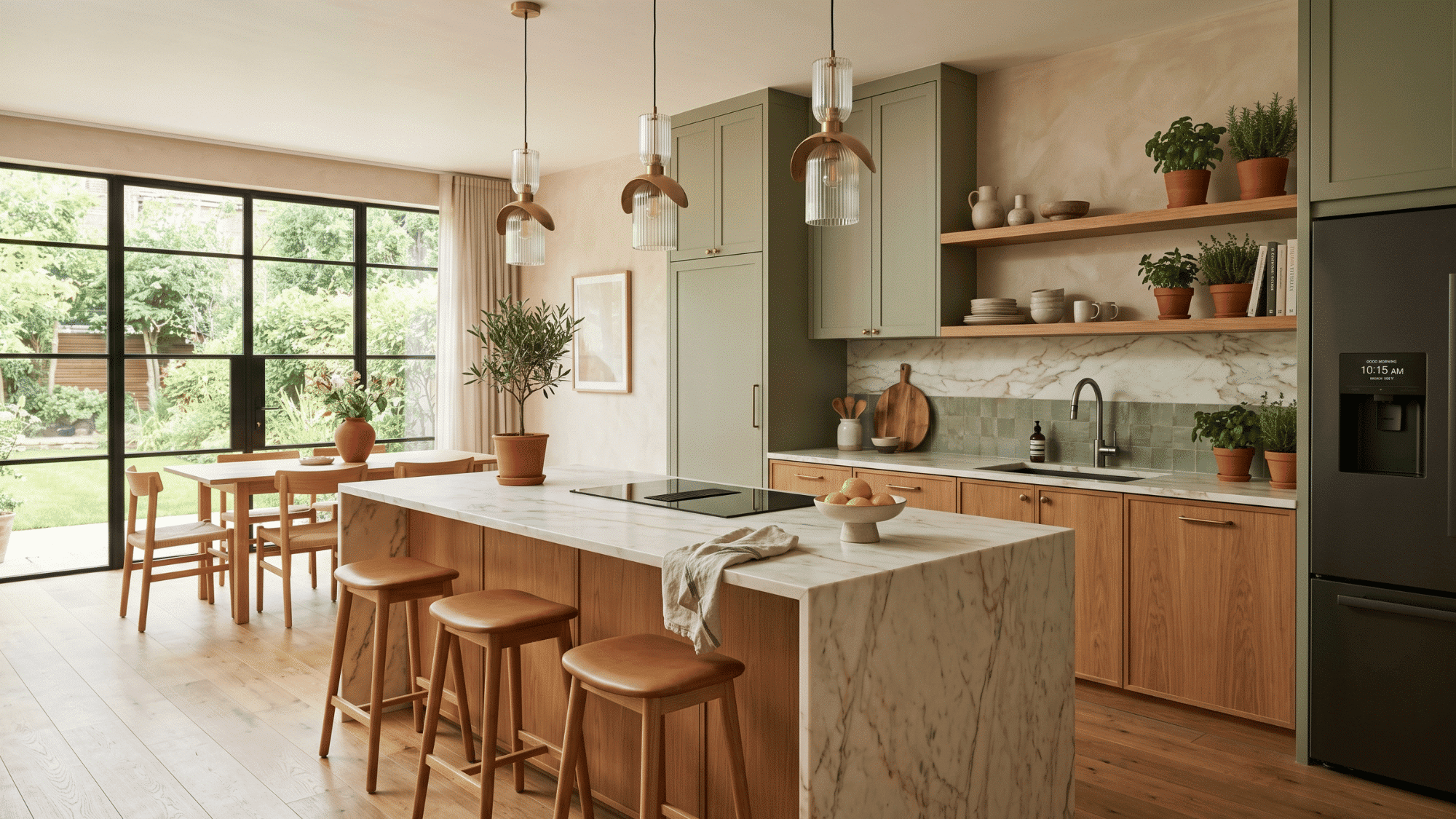
Notice Where You Need More Prep Space
Before deciding you need a bigger kitchen, pay attention to how you use the counters you have.
Where do you naturally chop vegetables or roll out dough? Is that space close to the tools and ingredients you need? Do you have to move the toaster, coffee maker, and a pile of mail before you can get started?
Sometimes the problem is a lack of counter space. Other times, it’s that the available space is in an inconvenient spot or has become permanent storage.
As you cook and serve, notice which tasks compete for the same surface. You might need a more useful stretch of counter near the range, a place to set down groceries, or a serving area that leaves your prep space available.
Write down the task you’re struggling with before deciding on the solution. “I need somewhere to put hot serving dishes” gives your design team more to work with than “I want a bigger island.”
Pay Attention to Storage That Makes You Work Harder
Holiday cooking has a way of bringing rarely used items out of hiding. It can also remind you why they’ve been hiding in the first place.
If reaching a roasting pan means emptying half a cabinet, or finding a serving spoon requires opening three drawers, take note.
Well-planned cabinetry starts with what you need to store. Deep drawers may make pots and pans easier to reach. Pullouts can help organize pantry items. Storage designed around baking sheets, cutting boards, or larger serving pieces can give those awkward items a more convenient home.
Location matters, too. Think about where you use something and whether it makes sense to keep it nearby.
You don’t have to solve every storage problem during dinner prep. A quick note or photo can help you remember it when you’re ready to talk through cabinet options.
Watch Where People Gather
Even when there’s comfortable seating somewhere else, guests often end up in the kitchen.
As people come and go, notice where their paths cross yours. Does getting a drink mean walking through the cooking area? Do stools make it difficult to move behind the island? Does an open dishwasher block a busy walkway?
These details can help you understand what needs to change in a future layout.
A beverage area or serving spot outside the main work area might make gathering easier. Seating may work better in a different location. And while an island can be useful, its size and placement need to leave enough room for people, appliances, and cabinet doors.
Think about how many people normally use the kitchen, too. Your remodel should feel comfortable when you’re making breakfast as well as when you’re hosting a holiday meal.
Consider What You Need From Your Surfaces
Cooking and cleanup can help clarify what matters to you in a countertop or floor.
Maybe you love the appearance of your current counters but wish the care routine were different. Perhaps you’re ready for flooring that better suits a busy household. Or you’ve noticed that a finish you admired in a photo feels different when you live with it every day.
When comparing materials, ask about care requirements, stain and scratch resistance, and any precautions the manufacturer recommends. Countertop and flooring options have different characteristics, so it helps to understand how each one fits your routines.
Style still matters. Bring home samples when available and look at them alongside your cabinetry and other finishes, in your own lighting. You’ll want choices that feel right together and make sense for the way you use the room.
Turn Your Notes Into a Realistic Wish List
After the gathering, revisit what you noticed.
Which frustrations happen every day? Which only show up when you’re cooking for twelve? Both are worth considering, but recurring problems can help you set priorities.
Start with a short list of must-haves and nice-to-haves. More accessible cookware storage might be essential. A separate beverage area might be something you’d enjoy if the space and budget allow.
Include what you like about your kitchen, too. You may want to keep a favorite view, a convenient sink location, or the spot where everyone sits to talk while dinner cooks.
Gather a few photos of your current space, save inspiration images, and think about a preliminary budget and preferred timing. Together, those details give your design team a clearer picture of what you want to accomplish.
Start Planning Around the Way You Live
The most helpful kitchen inspiration can come from your own routines. Where you set down a grocery bag, how you reach for a pan, and where your family gathers all offer clues about what would make the space work better.
If you’re considering a kitchen remodel in the new year, bring your observations, wish list, and inspiration photos to us. Our team can help you explore cabinetry, countertops, flooring, and tile as you plan a kitchen that fits your home and the way you live.